After Your Surgery
After all the planning, considerations and decisions that go into choosing breast augmentation, there are still many important topics to factor in as you plan for recovery and enjoy the results of your breast implant surgery for years to come. This page focuses on what you can expect, and covers several key topics that should be kept in mind in the weeks, months and years following your procedure.
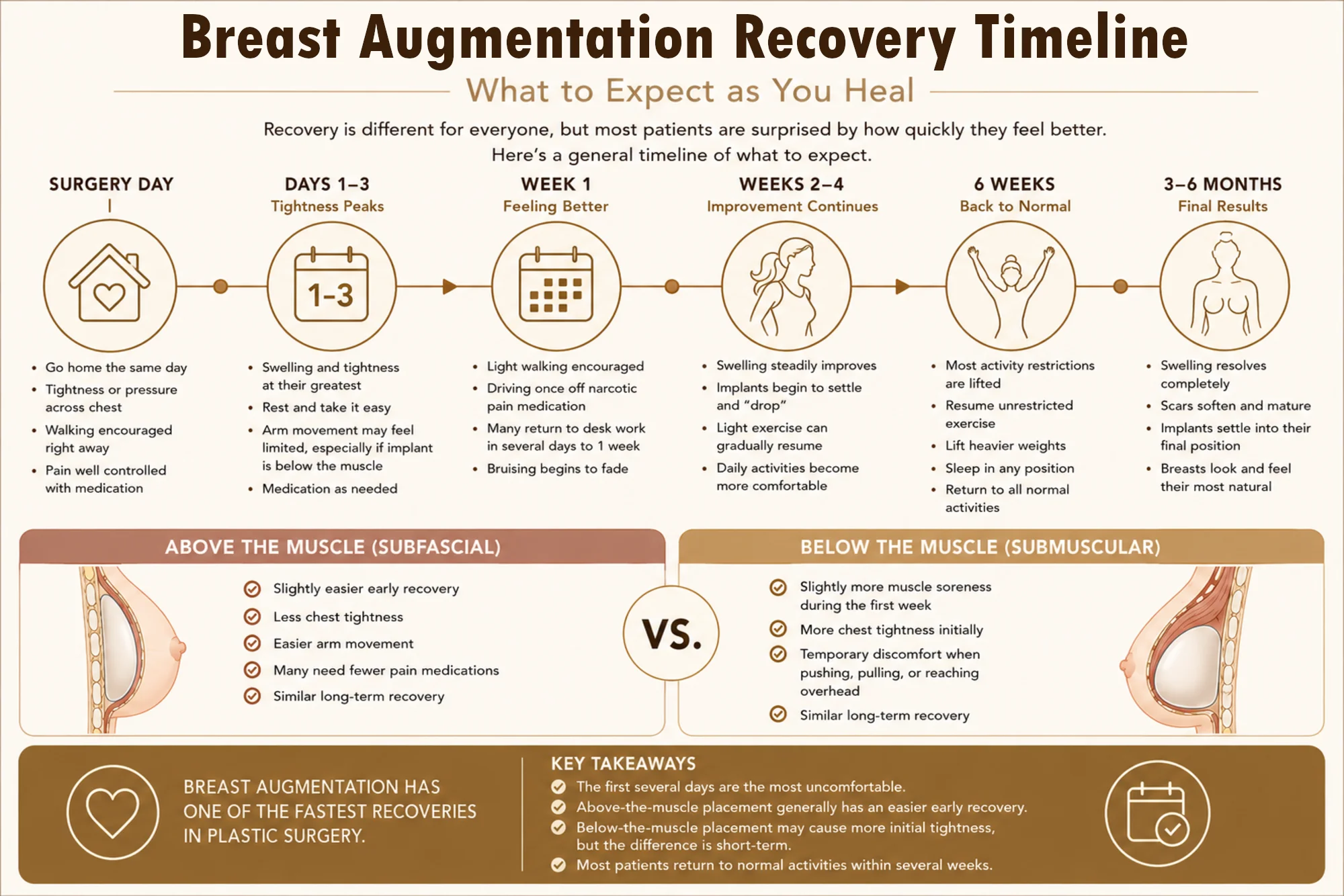
Recovery Timeline After Breast Implant Surgery
One of the most common questions we hear is, “How long will recovery take?” Fortunately, breast augmentation has one of the quickest recoveries of any cosmetic surgery. While everyone’s experience is slightly different, most patients are pleasantly surprised by how quickly they return to normal activities.
Recovery does depend somewhat on where the implant is placed. Implants placed beneath the pectoralis muscle generally cause a bit more soreness during the first week because the muscle has been elevated. Patients with implants placed above the muscle – particularly using the subfascial technique – often experience a somewhat easier early recovery. Regardless of implant location, most patients are back to their normal routines within a few weeks.
Day of Surgery
- Go home the same day.
- Expect tightness or pressure across the chest rather than severe pain.
- Walking is encouraged immediately to promote circulation.
- Most discomfort is well controlled with oral pain medication.
Days 1–3
This is when swelling and tightness are at their greatest.
Above the muscle
- Less muscle soreness
- Easier arm movement
- Many patients require fewer pain medications
Below the muscle
- More chest muscle tightness
- Temporary discomfort when pushing, pulling, or reaching overhead
- Muscle relaxation gradually improves over the first week
Week 1
Most patients are feeling significantly better.
- Light walking is encouraged.
- Most patients are driving once they are no longer taking narcotic pain medication.
- Many people with desk jobs return to work within several days to one week.
- Bruising begins to fade.
Weeks 2 to 4
This is when patients really begin feeling like themselves again.
- Swelling steadily improves.
- Implants begin settling into a more natural position.
- Light exercise can gradually resume.
- Most daily activities become comfortable.
Patients with implants placed beneath the muscle often notice the greatest improvement during this period as the muscle relaxes and the implants begin to “drop.”
6 Weeks
Most activity restrictions have been lifted. Patients can generally:
- Resume unrestricted exercise
- Lift heavier weights
- Sleep comfortably in any position
- Return to all normal daily activities
3 to 6 Months
The final result continues to evolve. During this period:
- Swelling resolves completely.
- Scars soften and mature.
- Implants settle into their final position.
- The breasts develop their most natural appearance and feel.
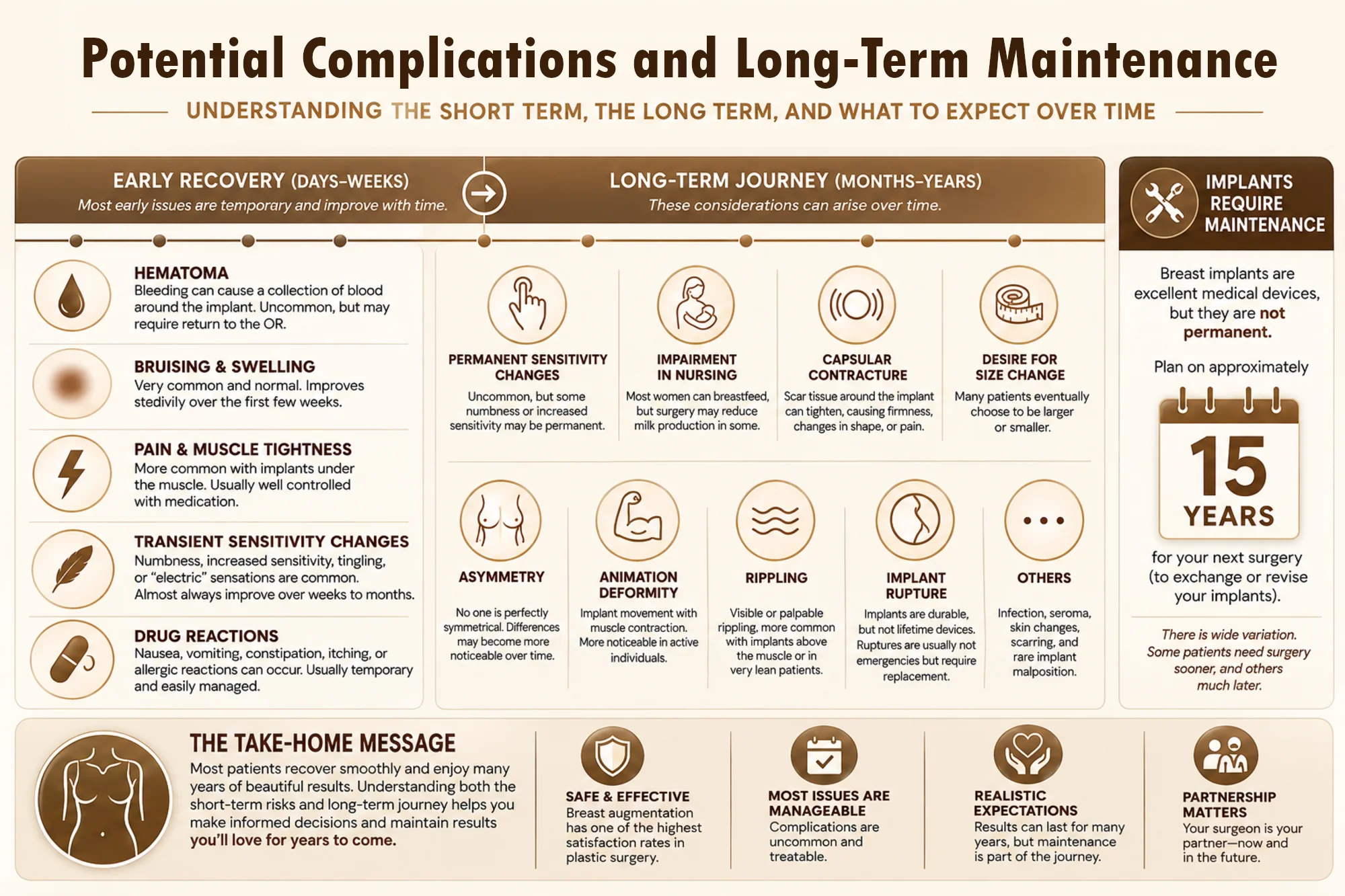
Potential Complications and Long-Term Maintenance
Every operation has risks, and breast augmentation is no exception. Fortunately, serious complications are uncommon, especially when surgery is performed by an experienced, board-certified plastic surgeon.
We believe patients should understand not only the short-term risks of surgery but also the long-term commitment that comes with choosing breast implants. Modern implants are remarkably durable, but they are not lifetime devices.
The good news is that most patients recover uneventfully and enjoy many years with beautiful, natural-looking results.
Short-Term (Early) Recovery
Most early issues occur within the first several weeks after surgery and are generally temporary.
Bruising and Swelling
Nearly every patient develops some degree of swelling and bruising. These improve steadily over the first few weeks and are considered a normal part of healing.
Pain and Muscle Tightness
Discomfort varies depending on implant placement. Patients with implants beneath the muscle often experience more tightness during the first week than those with implants placed above the muscle.
Fortunately, pain is usually well controlled with modern anesthesia techniques and postoperative medications.
Temporary Changes in Nipple Sensation
It is very common for nipple sensation to change immediately after surgery.
Patients may experience:
- Numbness
- Increased sensitivity
- Tingling
- Intermittent “electric shock” sensations
These changes almost always improve as the nerves recover over the following weeks to months.
Hematoma
A hematoma is a collection of blood around the implant caused by postoperative bleeding.
Although uncommon, it typically requires a return to the operating room to remove the blood and stop the bleeding. Prompt treatment usually leads to an excellent outcome.
Drug Reactions
Nausea, vomiting, constipation, itching, or allergic reactions to medications occasionally occur after surgery. These are usually temporary and can almost always be managed with medication adjustments.
Long-Term Considerations
While early recovery is relatively brief, breast implants require lifelong awareness. Most long-term issues develop gradually over years rather than weeks.
Permanent Changes in Sensation
Although most sensory changes resolve, a small percentage of patients experience permanent numbness or increased sensitivity of the nipples or breast skin. Fortunately, this is uncommon.
Breastfeeding
Most women are able to successfully breastfeed after breast augmentation. However, surgery may reduce milk production in some patients, particularly depending on the incision location and individual anatomy. If future breastfeeding is very important to you, this should be part of your preoperative discussion.
Capsular Contracture
Your body naturally forms a thin capsule of scar tissue around every implant. In some patients, that capsule gradually tightens around the implant, making the breast feel firmer and occasionally changing its shape or causing discomfort.
This is known as capsular contracture and remains one of the most common reasons for revision surgery. Fortunately, modern surgical techniques, implant technology, and meticulous sterile handling have significantly reduced its incidence.
Implant Rippling
Some women – particularly those with thin breast tissue or larger implants – may notice visible or palpable rippling. This occurs more commonly with implants placed above the muscle and in very lean patients. Rippling is usually a cosmetic issue rather than a medical problem.
Animation Deformity
Patients with implants beneath the pectoralis muscle may notice the implant moves when they flex their chest muscles. For some women this is barely noticeable. For athletes, weightlifters, or women who frequently use their chest muscles, it can become bothersome enough to consider revision surgery.
Breast Asymmetry
No woman begins with perfectly symmetrical breasts, and surgery cannot create perfect symmetry. Small differences in nipple position, breast volume, chest wall shape, or implant position may become more noticeable over time. Some patients eventually choose revision surgery to improve these differences.
Changing Size Preferences
One of the most common reasons patients return years later is surprisingly simple – they’ve changed their mind. Some patients decide they would like to be slightly larger.
Others decide they would prefer a smaller implant. Neither decision means anything went wrong with the original surgery. People’s lifestyles, body weight, exercise habits, and aesthetic preferences naturally evolve over time.
Implant Rupture
Modern silicone implants are extremely durable, but no implant lasts forever. A rupture is usually not an emergency and is often discovered on routine imaging or during evaluation for another concern. When a rupture occurs, implant replacement is generally recommended.

The Reality of Implant Maintenance
One of the biggest misconceptions about breast augmentation is that it is a “one-and-done” operation. In reality, breast implants should be viewed much like hip replacements, knee replacements, or dental crowns – they are excellent medical devices, but they are not expected to last forever.
Some women may go well over twenty years without requiring additional surgery. Others may need revision much sooner because of pregnancy, weight changes, implant rupture, capsular contracture, or simply changing personal preferences.
Our surgeons generally advise patients to expect that they will likely undergo another breast operation approximately every 15 years, recognizing that there is tremendous individual variation. Some patients may never need surgery that soon, while others require revision much earlier.
Approaching breast augmentation with this mindset helps establish realistic expectations and allows patients to make informed decisions.
Our Perspective
Modern breast augmentation has one of the highest patient satisfaction rates in all of plastic surgery. The overwhelming majority of women recover smoothly, enjoy their results for many years, and would choose to have the procedure again.
However, implants are not permanent devices. Understanding both the short-term risks and the long-term commitment is an essential part of becoming an informed patient. The best breast augmentation isn’t simply a beautiful result today – it’s a result you continue to enjoy and maintain for years to come.
Breast Implant Associate Illness (BII)
Breast implant associated illness – commonly abbreviated BII – is a term used to describe a broad collection of systemic symptoms reported by some women with breast implants.
Breast implant illness exists as a clinical phenomenon. Too many women report similar symptoms – and too many report improvement after implant removal – for their experiences to be completely dismissed.
At the same time, the medical community does not yet fully understand why these symptoms occur, why they affect some patients but not others, or whether breast implants are directly responsible for every reported symptom.

What Are the Symptoms?
Breast implant illness does not produce one specific or predictable symptom pattern. Patients commonly report some combination of:
- Persistent fatigue
- Difficulty concentrating or “brain fog”
- Memory problems
- Joint pain
- Muscle aches or weakness
- Headaches
- Sleep disturbance
- Anxiety or depression
- Hair loss
- Skin rashes
- Dry eyes or dry mouth
- Changes in weight
- Gastrointestinal symptoms
- Heart palpitations
- Tingling or numbness
- A general feeling of inflammation or poor health
Symptoms may begin relatively soon after implantation or may not appear until many years later. They have been reported with silicone and saline implants and with smooth and textured surfaces. The FDA recognizes that patients report these systemic symptoms, while also noting that their causes remain poorly understood.
Can Breast Implant Illness Be Tested For?
No. There is currently:
- No blood test for breast implant illness
- No imaging study that confirms it
- No biopsy finding unique to it
- No universally accepted diagnostic criteria
- No single symptom that proves an implant is responsible
Breast implant illness is therefore an entirely clinical diagnosis, and more specifically, a diagnosis of exclusion. This means the diagnosis is based upon:
- The patient’s symptoms and medical history
- The timing of those symptoms in relation to her implants
- An appropriate evaluation for other possible medical causes
- The patient’s response after implant removal, when removal is chosen
The absence of an abnormal blood test does not mean that the patient’s symptoms are imaginary. It means that our current medical tests cannot identify a specific marker for this condition.
Why Is the Diagnosis Difficult?
The symptoms associated with breast implant illness are real, but they are also nonspecific.
Fatigue, joint pain, poor concentration, sleep disruption, anxiety, hair loss, and digestive problems can also be associated with:
- Thyroid disorders
- Anemia or nutritional deficiencies
- Autoimmune disease
- Fibromyalgia
- Chronic infection
- Hormonal changes
- Perimenopause or menopause
- Medication side effects
- Sleep disorders
- Depression or anxiety
- Other medical conditions
For that reason, patients should undergo a thoughtful medical evaluation rather than automatically assuming that every symptom comes from their implants.
However, when a reasonable evaluation fails to identify another explanation – and especially when multiple symptoms developed after implantation – it is appropriate to consider the implants as a possible contributor.
What Might Cause Breast Implant Illness?
No single mechanism has been proven. Several possibilities continue to be studied.
- Chronic Immune or Inflammatory Response: Every breast implant is a foreign object, and the body naturally forms a capsule of scar tissue around it. One theory is that certain individuals may develop a more generalized immune or inflammatory response to the implant, its surface, microscopic silicone exposure, or the surrounding capsule.
- Individual Susceptibility: Some patients may be more biologically susceptible because of genetics, allergies, autoimmune tendencies, chronic inflammatory conditions, or other factors that have not yet been clearly identified.
- Bacterial Biofilm: Another theory involves a very low-grade bacterial biofilm on the implant or within the capsule. Biofilm is already believed to contribute to some cases of capsular contracture, although its role in systemic symptoms remains uncertain.
- Multiple Contributing Factors: Breast implant illness may ultimately prove not to be one single disease. It may represent several overlapping processes that produce a similar collection of symptoms in susceptible patients.

What Does the Scientific Literature Show?
The evidence is still evolving, but a growing number of studies have found that many women report meaningful symptom improvement after implant removal.
A 2024 review involving more than 39,000 implant patients found that among the studies reporting outcomes after explantation, approximately 83.5% of patients experienced symptom improvement.
A 2025 systematic review of 33 studies and more than 6,000 women found that approximately 81.9% reported improvement after explantation, with an average reduction in symptom burden of about 55%. Fatigue, joint pain, and muscle pain were among the most frequently reported symptoms.
A large prospective cohort study also found significant improvement in common systemic complaints and quality of life after implant removal.
Other clinical studies have similarly documented improvement across fatigue, cognitive symptoms, joint pain, muscle discomfort, and several other symptom categories following explantation.
These studies are encouraging, but they have limitations. Many do not include untreated comparison groups, symptom reporting is subjective, surgical techniques vary, and placebo or expectation effects cannot be completely separated from biological improvement.
Nevertheless, the consistency of reported improvement across multiple studies makes it difficult to dismiss the phenomenon entirely.
Will Removing the Implants Make Me Feel Better?
No surgeon can promise that implant removal will eliminate every symptom. Some patients experience dramatic improvement. Some improve partially. Some improve temporarily. Some experience little or no meaningful change.
However, based upon the published literature, the greatest likelihood is that a patient who genuinely believes she is experiencing breast implant illness will feel at least somewhat better after explantation.
Across several reviews and clinical studies, roughly four out of five patients reported some degree of symptom improvement after their implants were removed.
That does not prove the implant caused every symptom, but it is valuable information when a patient is deciding whether removal is appropriate for her.
Is Complete or “En Bloc” Capsulectomy Required?
Implant removal may be performed alone or combined with partial or complete removal of the surrounding capsule.
An en bloc capsulectomy means removing the implant and capsule together as one intact unit. This is medically necessary in certain situations – most importantly, when an implant-associated cancer is suspected or confirmed.
For breast implant illness alone, there is not currently strong evidence that every patient requires an en bloc capsulectomy. Capsule removal can increase operative time and may increase the risk of bleeding, pneumothorax, chest-wall injury, or damage to surrounding tissues – particularly when the capsule is thin and tightly adherent to the ribs.
The appropriate operation should be individualized according to:
- Implant position
- Capsule thickness
- Capsular contracture
- Implant rupture
- Previous surgery
- Patient anatomy
- The safety of removing the capsule
The goal should be thoughtful and safe surgery – not automatically performing the most aggressive procedure.
Our Perspective
We do not believe patients with these symptoms should be dismissed, told that everything is psychological, or made to feel that their experience is not real. We also do not believe that every episode of fatigue, joint pain, anxiety, or brain fog in a woman with implants is necessarily caused by the implants.
Both ideas can be true:
Breast implants remain safe and highly satisfactory for the overwhelming majority of patients.
And:
A smaller group of women appears to develop systemic symptoms that may improve when their implants are removed.
Our responsibility is to listen carefully, investigate other reasonable explanations, discuss what is known and unknown, and help each patient make the decision that feels right for her.
Breast Cancer Surveillance after Breast Augmentation
One of the most common questions we hear from patients considering breast augmentation is: “Will breast implants increase my risk of developing breast cancer?”
Fortunately, the answer is reassuring. Breast implants do not increase your risk of developing breast cancer.
Women with breast implants develop breast cancer at approximately the same rate as women without implants. Breast augmentation does not cause breast cancer, nor does it increase the likelihood that cancer will develop later in life.
The key to maintaining excellent breast health is exactly the same whether or not you have implants: routine screening, breast awareness, and prompt evaluation of any new changes.

Do Breast Implants Cause Breast Cancer?
No. After decades of research involving hundreds of thousands of women, there is no evidence that silicone or saline breast implants increase the risk of developing breast cancer.
It is important to distinguish breast cancer from a very different condition called Breast Implant-Associated Anaplastic Large Cell Lymphoma (BIA-ALCL).
BIA-ALCL is not breast cancer. It is a rare lymphoma that develops within the scar capsule surrounding certain breast implants rather than within the breast tissue itself.
Nearly all confirmed cases have been associated with macrotextured breast implants. Since those implants have been removed from the U.S. market, the risk for women receiving today’s smooth implants has become extraordinarily low.
For most women considering modern breast implants, BIA-ALCL should be understood as an exceedingly rare condition rather than a reason to avoid breast augmentation.
Mammography Remains the Standard of Care
The single most important screening tool for breast cancer remains routine mammography.
Women with breast implants should continue to follow the same age-appropriate screening recommendations as women without implants unless their physician recommends a different schedule because of family history or other risk factors.
Having implants does not mean you should skip mammograms. In fact, they become even more important.
Always Tell the Mammography Technologist You Have Implants
This is one of the most important pieces of advice our surgeons can give to patients.
Always tell your mammography technologist that you have breast implants before your examination begins.
Women with implants require specialized imaging called implant-displaced (Eklund) views.
During these additional images, the implant is gently displaced backward against the chest wall while the breast tissue is pulled forward and compressed separately.
These modified views allow the radiologist to visualize significantly more breast tissue than would be possible with standard mammography alone. Without these specialized views, some breast tissue can remain hidden behind the implant.
Fortunately, imaging centers perform these studies every day, and the additional views are routine for experienced mammography technologists.

What About MRI?
Breast MRI is another excellent imaging tool. MRI is extremely sensitive and can detect abnormalities that may not be visible on mammography, particularly in women with dense breast tissue or those at elevated genetic risk for breast cancer.
MRI also plays an important role in evaluating the integrity of silicone breast implants when implant rupture is suspected. However, MRI has several limitations:
- It is significantly more expensive than mammography.
- It is not routinely recommended for average-risk women.
- Insurance coverage may be limited depending on the indication.
- It may identify findings that require additional testing, even though many ultimately prove to be benign.
For most women, MRI is best viewed as a complementary test rather than a replacement for mammography.
The Importance of Monthly Self-Examinations
No one knows your breasts better than you do. One of the simplest and most effective habits you can develop is performing a monthly breast self-examination.
The goal is not necessarily to find cancer, but instead to become familiar with what is normal for your own breasts so that you recognize when something changes. We recommend:
- If you still menstruate: Perform your breast self-examination on the first day of each menstrual cycle, when hormonal changes are least likely to affect breast tenderness or fullness.
- If you no longer menstruate: Choose the same calendar day every month – for example, the first day of the month – and make it part of your routine.
Consistency is far more important than the exact date. Notify your physician if you notice:
- A new breast lump
- Thickening within the breast
- Persistent swelling
- A change in breast shape
- Skin dimpling or puckering
- New nipple inversion
- Bloody or spontaneous nipple discharge
- Persistent pain in one specific location
- Enlarged lymph nodes in the armpit
- A sudden fluid collection around an implant, particularly years after surgery
Most new breast findings turn out not to be cancer. However, every persistent change deserves evaluation. Early diagnosis remains the single most important factor in achieving excellent outcomes.
Our Perspective
Our surgeons feel it is important to reassure patients that choosing breast implants does not mean sacrificing good breast health. Modern breast implants can safely coexist with excellent breast cancer surveillance.
The key is remaining proactive. Continue your routine mammograms. Tell your imaging center that you have implants. Perform regular self-examinations. And never hesitate to seek evaluation if something feels different.
Revision Breast Surgery
One of the biggest misconceptions about breast augmentation is that it is a “one-and-done” procedure. In reality, breast implants are long-lasting – but they are not lifetime devices.
Many women will eventually choose to have another breast operation. Sometimes that surgery is necessary because of a complication. More often, it is simply the result of changing anatomy, aging, pregnancy, weight fluctuations, or changing personal preferences.
The important thing to remember is this: Needing revision surgery does not mean your original breast augmentation failed.
Often, it simply reflects the fact that your body – and your goals – have changed over time.
Real Patient Examples
Sensitive Content
These before and after photos contain nudity. Please click/tap to view the images.
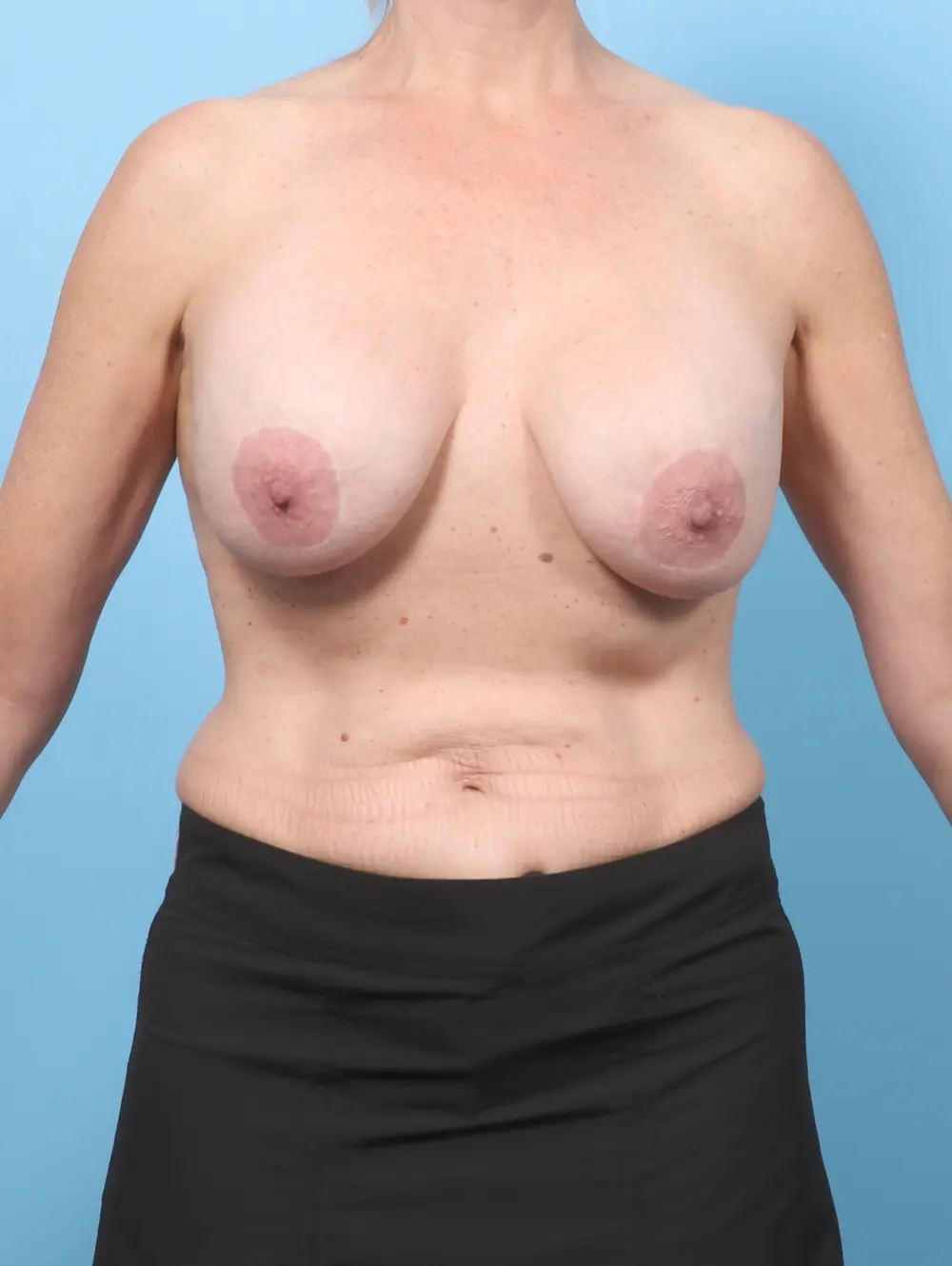
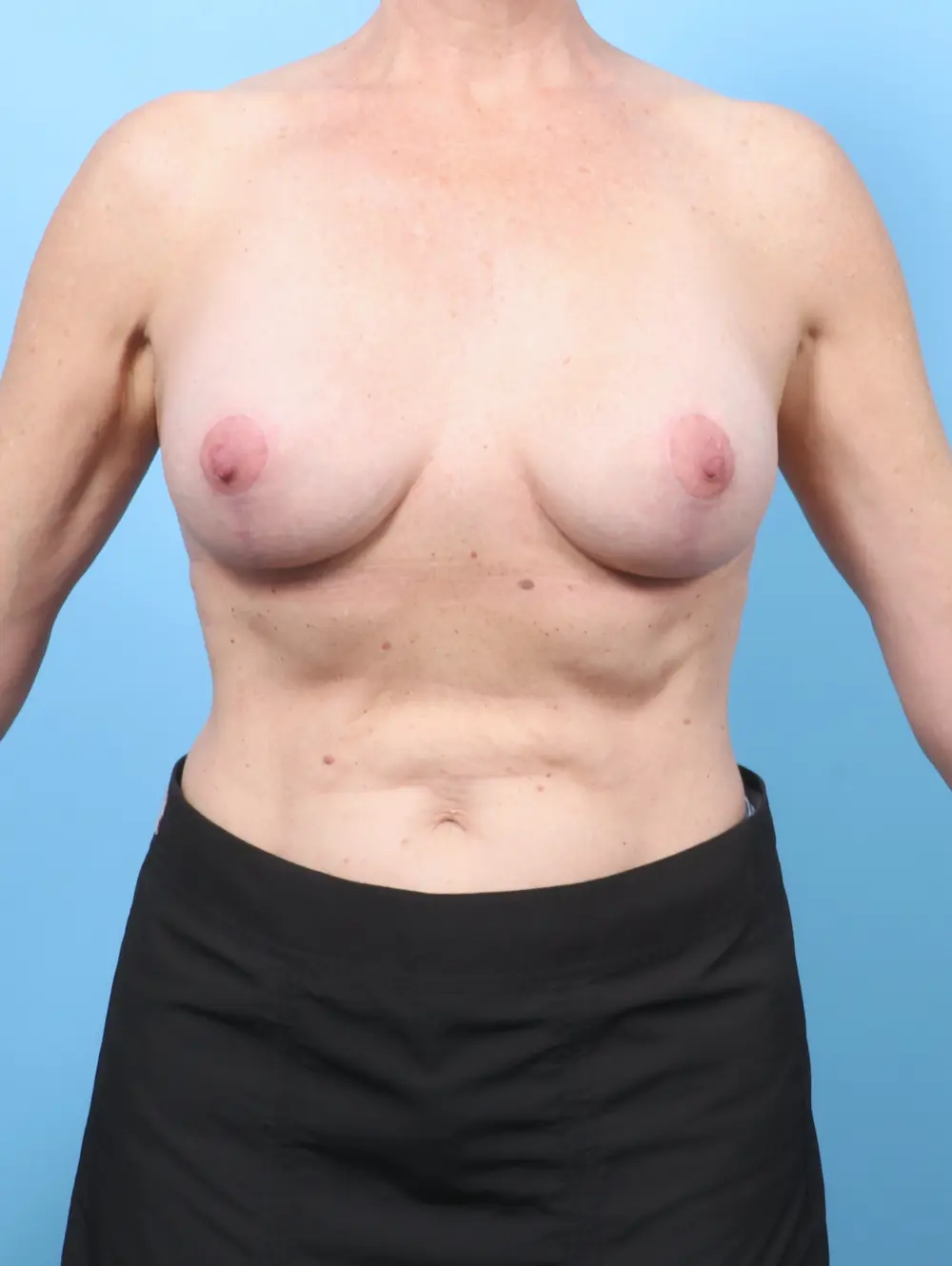
This 55-year-old woman from Elk Grove, California, is 5'8" and approximately 150 pounds. She had previously undergone breast augmentation with 375 cc Mentor implants combined with a circumareolar, or Benelli, mastopexy. She presented with residual breast ptosis and enlarged areolas, findings that can occur with this type of lift. For her revision, we downsized her implants to 255 cc Sientra moderate-plus silicone gel implants, maintained their position below the muscle, and performed an anchor-style breast lift to provide greater control over breast shape and areolar size.
Her result demonstrates improved symmetry, appropriately sized areolas, and lifted, perky breasts that are nicely proportioned to her frame. This case reinforces an important principle: when significant lifting and reshaping are required, an anchor-style mastopexy often provides greater control than a circumareolar approach. In this patient, combining a smaller implant with a more powerful lift created a balanced, youthful, and frame-appropriate result.

Sensitive Content
These before and after photos contain nudity. Please click/tap to view the images.
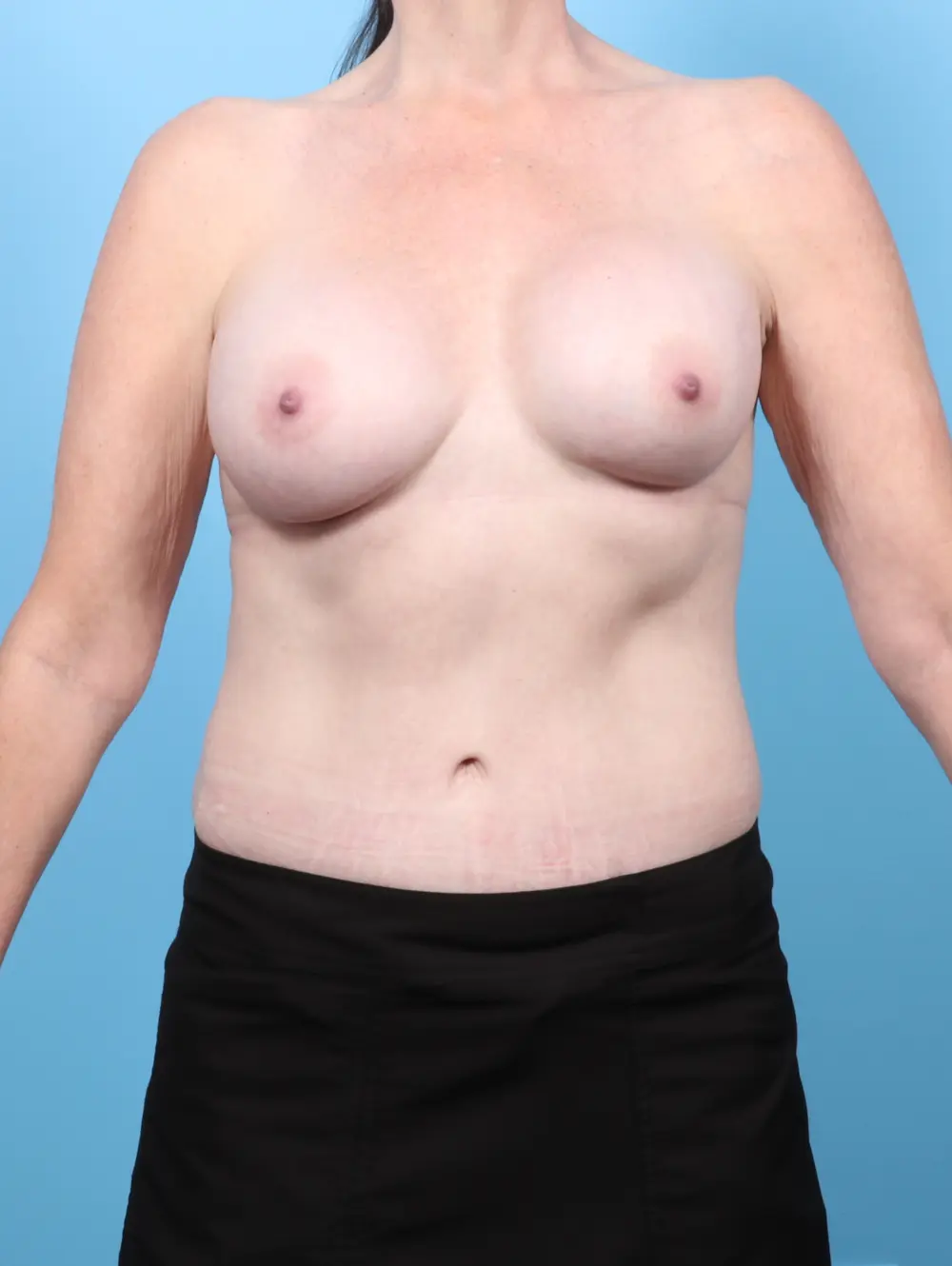
This 54-year-old woman from Yuba City, California, is 5'4" and approximately 130 pounds. She presented for breast implant revision with a left-sided capsular contracture. Capsular contracture occurs when the scar tissue that naturally forms around a breast implant becomes excessively thick or tight. This can cause the breast to feel firm and may lead to implant malposition, distortion, and sometimes discomfort. She underwent an implant exchange with complete removal of the capsule on the left side, followed by placement of new implants.
Her six-month result demonstrates restored symmetry, a soft and natural breast appearance, and excellent implant position. This case demonstrates how appropriate treatment of capsular contracture can restore both the softness and appearance of the breast while correcting the underlying problem.


Sensitive Content
These before and after photos contain nudity. Please click/tap to view the images.
This 41-year-old woman is 5'6" and approximately 140 pounds. She had undergone breast augmentation prior to having children and later experienced changes in her breast tissue related to pregnancy, nursing, and weight fluctuations. She presented for revision with what is commonly called a waterfall deformity. Her implants remained in an appropriate position, but the natural breast tissue had descended over the implants, creating the appearance seen in her preoperative photographs.
For her revision, we downsized her implants to 235 cc extra-cohesive silicone gel implants, maintained their position below the muscle, and revised her breast lift to reposition and reshape the overlying breast tissue. Her six-month result demonstrates beautiful symmetry with youthful, perky breasts that remain appropriately proportioned to her frame.
This case illustrates an important concept in breast augmentation: implants may remain stable while the natural breast tissue continues to change with pregnancy, nursing, weight fluctuations, and time. Successful revision therefore requires identifying whether the problem is the implant, the breast tissue, or both—and tailoring the surgery accordingly.


Sensitive Content
These before and after photos contain nudity. Please click/tap to view the images.
This 67-year-old woman from Folsom, California, is 5'2" and approximately 108 pounds. She had breast implants placed many years previously but never felt that they looked quite right. Her implants remained relatively high on her chest and appeared oversized for her petite frame. After careful consideration, she elected to have her implants removed without replacement, combined with a breast lift to reshape and reposition her natural breast tissue. Her result demonstrates a beautiful, natural breast shape that is soft, balanced, and appropriately proportioned to her frame.
There are many reasons a woman may ultimately choose to remove her breast implants. This case is an excellent reminder that revision surgery does not always require another implant. With appropriate anatomy and thoughtful reshaping of the existing breast tissue, explantation alone or combined with a mastopexy can create an elegant and natural result without implants.
Why Do Women Have Revision Surgery?
Here are some of the main reasons why women may choose another breast operation.
Changing Implant Size
Believe it or not, one of the most common reasons for revision surgery is a change in personal preference. Some women decide they would like to be a little larger. Others decide they would prefer a smaller, lighter implant.
Neither decision means the original operation was incorrect. As our lives change, so do our priorities. Pregnancy, exercise, aging, and lifestyle often influence what feels “right” years later.
Capsular Contracture
Every breast implant develops a thin layer of scar tissue around it called a capsule. Occasionally, that capsule becomes unusually firm and begins to tighten around the implant.
This is called capsular contracture. Women may notice:
- Increasing firmness
- A change in breast shape
- Breast asymmetry
- Discomfort or tightness
Treatment often involves removing or releasing the capsule and replacing the implant.
Implant Rupture
Modern silicone implants are remarkably durable. However, no implant lasts forever. Most silicone implant ruptures are “silent,” meaning the patient has no symptoms.
When a rupture is identified, implant exchange is generally recommended. Fortunately, replacing a ruptured implant is usually a very straightforward procedure.
Pregnancy and Weight Changes
Pregnancy, breastfeeding, and significant weight loss can dramatically change the appearance of the breasts. The implant itself usually remains unchanged. The breast tissue surrounding it does not.
Some women lose upper-pole fullness. Others develop loose skin or increased sagging. Many choose revision surgery combined with a breast lift to restore their previous appearance.
Rippling
Women with thin breast tissue or larger implants may develop visible or palpable rippling over time. Several solutions may be appropriate depending on the cause, including:
- Implant exchange
- Changing implant placement
- Fat grafting
- An internal bra for additional support
Implant Malposition
Occasionally an implant moves away from its intended position. Examples include:
- Bottoming out
- Lateral displacement
- Symmastia (“uniboob”)
- High-riding implants
Revision surgery may involve reconstructing the implant pocket, repositioning the implant, or adding additional internal support.
Animation Deformity
Women with implants beneath the pectoralis muscle sometimes notice movement of the implants during muscle contraction. For some women this is insignificant. For athletes or highly active individuals, however, it can become bothersome.
One option is converting the implant from beneath the muscle to above the muscle, often with additional soft-tissue support using an internal bra.
Breast Asymmetry
No woman begins perfectly symmetrical. Over time, natural aging, pregnancy, and changes in breast tissue can make asymmetries more noticeable. Revision surgery can often improve these differences, although perfect symmetry is rarely achievable.

When Is the Right Time for Revision Surgery?
Unlike many operations, revision breast surgery is rarely an emergency. In most situations there is time to thoughtfully evaluate your options and decide on the best long-term solution.
Exceptions include:
- Hematoma shortly after surgery
- Infection
- Certain implant ruptures
- Rare implant-associated cancers
For the majority of revision procedures, careful planning leads to the best results.
Revision surgery is often more technically demanding than a first-time augmentation. Scar tissue, previous implants, stretched tissues, and altered anatomy all require careful planning and experience.
Fortunately, modern techniques – including improved implants, advanced pocket reconstruction, internal bras, fat grafting, and newer surgical technologies – allow us to successfully address many of these issues.
Our Philosophy on Revision Surgery
Our surgeons view revision surgery differently than primary breast augmentation. The first operation is about creating beauty, but revision surgery is about restoring balance.
Every revision begins by understanding why the patient is unhappy. From there, solutions may include replacing an implant, adding a breast lift, correcting implant position, or maybe even leaving things as is for the time being.
There is no universal solution. Every revision should be individualized based on your anatomy, your concerns, and your long-term goals.
Request Your Consult
Meet Our Doctors
Our surgeons are dedicated to creating beautiful, natural results so you can look and feel your very best.